
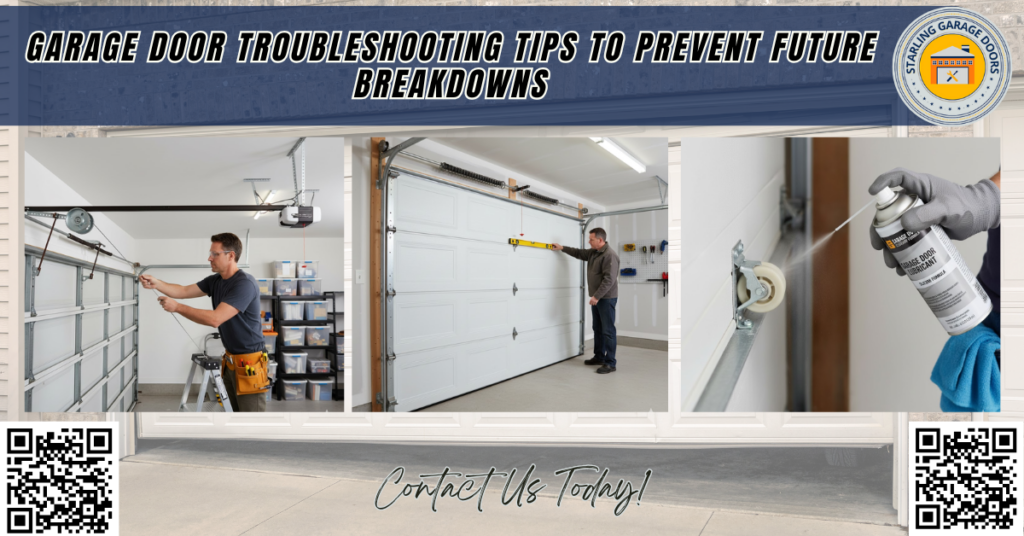
A rainy Monday in Houston, early morning traffic building, and a garage door stuck halfway. A family in Northside needed to get two kids to school and a parent to work. Our technician arrived, performed a quick garage door troubleshooting assessment, and found a frayed cable and a bent hinge that had been rubbing the track for weeks. The fix took less than an hour. The lesson will last for years. Small issues become big emergencies when no one is watching for the warning signs.
Your garage door is one of the hardest-working systems in your home or business. Many doors open and close more than one thousand times per year. Without regular inspections, tune-ups, and simple maintenance, wear adds up on springs, rollers, cables, tracks, and the garage door opener. A little prevention saves money, reduces stress, and keeps your family and property safe.
At Starling Garage Doors in Houston, we specialize in residential and commercial garage door service. This guide is a complete, practical resource. You will learn how to spot early symptoms, how to perform safe checks, when to call a pro, and how to build habits that prevent future breakdowns. Use this as your step-by-step playbook for reliable operation, quiet performance, and long service life.
Understanding How a Garage Door System Works
A garage door is a system of parts working together. Knowing the names and the jobs of each part makes troubleshooting easier and safer.
- Door panels carry the weight and connect through hinges that let the door bend as it rolls along the tracks.
- Rollers glide inside the tracks and keep the door aligned.
- Torsion springs or extension springs counterbalance the weight so the door feels light.
- Cables attach to the bottom brackets and drums to lift the door evenly.
- The garage door opener provides controlled motion and adds features like remote control, keypad access, smartphone connectivity, and lighting.
- Safety sensors sit low at the track ends and stop the door when something crosses the beam.
- Weather stripping seals gaps to block dust, pests, moisture, and drafts.
- Hardware like fasteners, bearings, center brackets, end bearing plates, and anchor cones hold everything together.
If one piece slips out of tune, the whole door works harder. Troubleshooting is about finding small imbalances early and restoring smooth, even operation.
Safety First: Rules Every Homeowner Should Follow
Safety comes before every inspection or adjustment.
- Disconnect power when necessary. Unplug the opener before touching electrical parts.
- Do not adjust high-tension springs or tightly wound cables. These are dangerous components. Leave spring and cable work to a garage door repair professional.
- Use the manual release cautiously. Pull the red release cord only when the door is fully down and secured so it does not fall.
- Keep fingers clear. Panel joints and hinges can pinch.
- Test the safety sensors often. A reliable reversal system prevents injuries.
- Wear eye protection and gloves. Metal edges can be sharp.
If anything feels risky, stop right away and call Starling Garage Doors for safe, professional help.
A Quick Troubleshooting Flow You Can Use Any Time
When something seems off, use this simple flow to figure out what to check next.
- Observe the symptom. Is the door noisy, slow, uneven, stuck, or reversing unexpectedly?
- Check the basics. Is there power to the opener? Are the remote and keypad batteries fresh? Is anything blocking the sensors or tracks?
- Test manual balance. Pull the release, lift halfway, and let go. A balanced door stays near the middle. If it drops or shoots up, the spring system is out of balance.
- Listen and look. Grinding suggests dry rollers or misaligned tracks. Clicking suggests a limit setting or sensor issue. Slapping suggests a loose chain or belt.
- Decide on DIY or professional service. Lubrication, cleaning, tightening small fasteners, and sensor alignment are good homeowner tasks. Spring tension, cable replacement, track straightening, opener motor repairs, and panel replacement belong to trained technicians.
Common Problems and Clear, Practical Fixes
Door Will Not Open or Close
Likely causes: No power, lock feature engaged, dead remote batteries, dirty or misaligned safety sensors, travel limits out of adjustment, or a broken spring.
What you can do now:
- Confirm power at the outlet. Check the circuit breaker and the opener plug.
- Replace the remote batteries and try the wall button.
- Clean the photo-eyes with a soft cloth. Both sensor lights should be solid.
- Make sure nothing is within the sensor beam, including tools, bikes, or trash cans.
- Check the opener for a blinking error code and follow the manual for that brand.
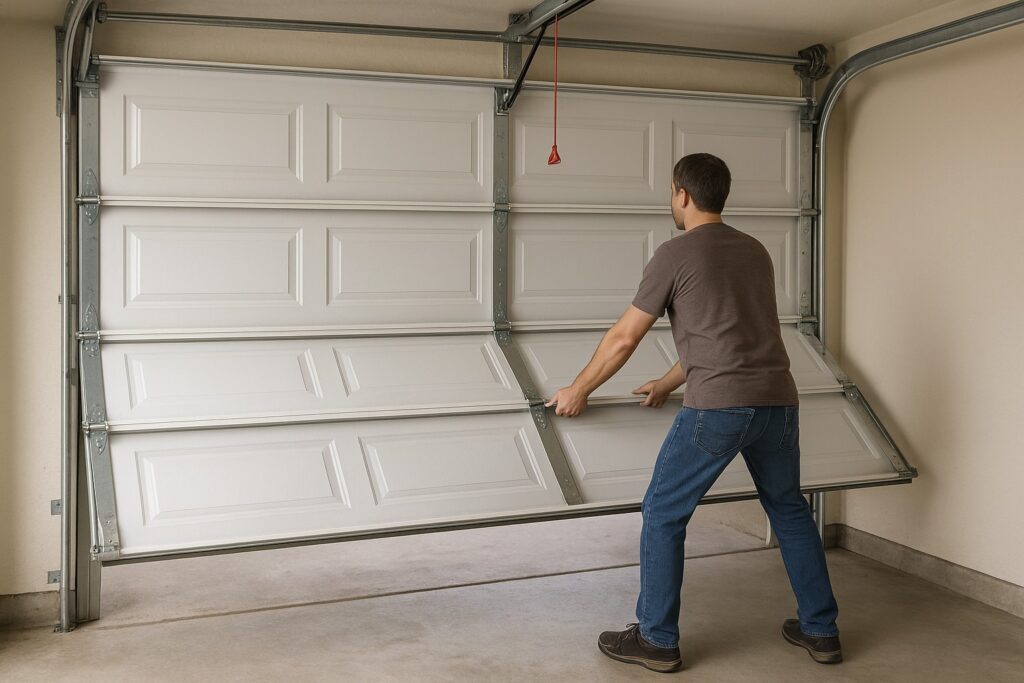
- Try opening the door manually. If it feels heavy or will not move, a spring may be broken.
- Do not force it. Call a professional.
Prevent the next occurrence: Keep sensors clean and aligned, schedule a yearly thorough inspection, and ask us to verify limit settings during your tune-up.
Door Moves Unevenly or Looks Crooked
Likely causes: Weak spring, frayed cable, bent hinge, or worn rollers.
What you can do now:
- Look at the cables near the bottom corners. If one cable is loose or looks shredded, stop using the door and call us.
- Inspect rollers. If you see cracked nylon, rusted bearings, or flat spots, plan a replacement.
- Check hinges for bending or missing fasteners. Tighten loose screws if safe to do so.
Prevent the next occurrence: Replace worn rollers with high-quality nylon rollers, keep hinges lubricated, and schedule seasonal checks so a small alignment issue does not grow into a full off-track emergency.
Loud, Squeaking, or Grinding Noises
Likely causes: Dry metal contact, loose hardware, misaligned tracks, or worn bearings.
What you can do now:
- Tighten accessible nuts and lag screws on hinges and track brackets.
- Lubricate rollers, hinges, and spring coils with a silicone or garage-door specific lubricant. Avoid heavy grease that collects dust.
- Sight down each track. If you notice a slight inward or outward bow, a careful professional adjustment can restore the correct spacing.
Prevent the next occurrence: Put lubrication on your calendar every six months. Quiet, smooth doors last longer and reduce strain on the opener.
Door Reverses at the Floor or Stops Midway
Likely causes: Close limit or force setting is off, debris on the threshold, swollen weather seal, or friction in the tracks.
What you can do now:
- Clean the floor where the bottom seal meets the concrete.
- Inspect the bottom seal for tears or bulges. Replace worn seals to reduce drag.
- Check the tracks for screws that protrude into the roller path.
- Follow the opener manual to fine-tune travel limits and force. Make small adjustments and test often.
Prevent the next occurrence: Keep the garage entrance clean, replace seals when brittle, and ask our technician to document your opener settings during annual service so you have a baseline.
Remote Control or Keypad Will Not Work
Likely causes: Dead batteries, interference, erased codes after a power surge, or an aging receiver board.
What you can do now:
- Replace batteries, then re-sync the remote following your brand’s instructions.
- Try the remote from different distances. Some LED bulbs cause interference, so test with the lights off.
- Reprogram the keypad and confirm it has a tight weather cover to block moisture.
Prevent the next occurrence: Keep spare batteries in a drawer, mount the keypad under a small awning if your entrance gets direct rain, and ask about upgraded openers with stronger, more reliable radio systems.
Door Sticks to the Floor or Freezes
Likely causes: Humidity in Houston, dirty tracks, hardened weather stripping, or a mislevelled slab.
What you can do now:
- Wash tracks with mild soap and water, then dry them.
- Condition rubber seals with a silicone protectant.
- Consider a threshold seal that bonds to the floor to create an even landing for the door.
Prevent the next occurrence: Reapply protectant before summer and winter, and sweep the garage entrance weekly to keep grit from grinding into seals.
The Houston Climate Game Plan
Our Gulf Coast climate brings heat, humidity, sudden storms, and occasional cold snaps. Each element affects garage doors.
- Humidity and salt air promote corrosion on cables and springs. Ask about galvanized or coated parts for longer life.
- Heavy downpours test seals and alignment. Good weather stripping and well-seated tracks keep water out.
- Heat dries out lubricants faster. Increase lubrication frequency in summer.
- Cold mornings can stiffen seals and cause sensor brackets to contract slightly. A quick visual check each season prevents nuisance reversals.
A Houston-specific maintenance plan keeps your system stable across these changing conditions.
The Seasonal Maintenance Checklist
Use this simple checklist to build a habit of prevention. Save it, print it, and keep it near the garage.
Every Month
- Watch a full open and close cycle. Listen for new noises.
- Test photo-eyes by waving a broom across the beam. The door should reverse.
- Check the wall button lock function is off if the remotes stop working.
Every Three Months
- Wipe sensor lenses and adjust them so the LEDs are solid.
- Tighten accessible hinge and track bracket fasteners.
- Clean the tracks and the garage floor near the threshold.
Every Six Months
- Lubricate rollers, hinges, bearing points, and spring coils.
- Inspect weather stripping along the bottom and sides. Replace if brittle.
- Perform a balance test with the manual release.
Annually
- Schedule a professional tune-up with Starling Garage Doors for a thorough inspection, written findings, and adjustments to alignment, force, and travel.
- Ask us to test the opener’s battery backup if installed.
- Review the age of springs and rollers. Many springs are rated for a certain number of cycles. Planning avoids surprise failures.
Deep Dive: Springs, Cables, and Balance
Springs carry the true load. Torsion springs sit above the door on a shaft. Extension springs mount along the tracks. When springs weaken, the opener strains and parts wear fast.
What to watch for
- Gaps in a torsion spring coil indicate a break.
- A door that slams shut, drifts down, or feels heavy during manual lift shows an imbalance.
- Frayed cables at the bottom corners are a red alert. Stop using the door and call us.
What we do
- Calculate the correct wire size and coil length based on your door’s weight and height.
- Set proper torque and test balance so the door stays at mid-travel.
- Replace cables and end hardware that show even minor fray or rust.
Balanced doors move smoothly, reduce opener stress, and stop surprise breakdowns.
Tracks, Rollers, and Quiet Performance
Rollers are small parts with a big effect on noise and alignment. Nylon rollers with sealed bearings are quiet and durable. Tracks must be straight, evenly spaced, and firmly anchored.
Signs of trouble
- Chatter or rattling on one side.
- Shiny scrape lines on the track walls.
- Flat-spotted or cracked roller wheels.
Prevention
- Upgrade to premium rollers during your next service.
- Keep brackets tight, use proper shims on uneven framing, and re-check after big storms or garage remodeling.
Weather Stripping and Energy Efficiency
Gaps around the door invite dust, pests, and humidity, and increase energy loss.
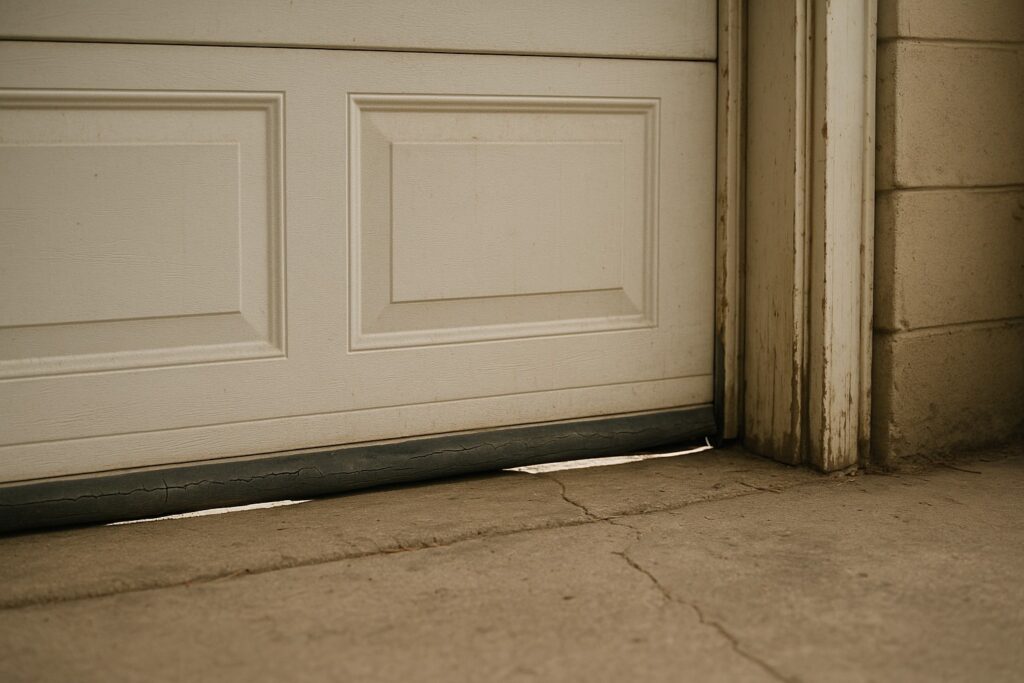
Where to seal
- Bottom seal or astragal meets the floor.
- Side and top seals mount to the jambs and header.
- Threshold seals help when the floor is uneven.
- Brush seals are useful on commercial doors with frequent traffic.
Extra benefits
- A tight seal reduces noise, protects stored items from moisture, and keeps your garage more comfortable for laundry areas, workshops, and home gyms.
Openers, Safety Features, and Smart Options
Modern garage door openers vary by drive type and features.
- Belt drive is quiet and ideal near bedrooms.
- Chain drive is durable for heavy doors.
- Direct drive and jackshaft options save ceiling space.
- Battery backup keeps you moving during outages.
- Smart controls allow phone access, activity logs, and alerts.
Tests you can do
- Reversal test: Place a piece of wood flat on the floor. The closing door should reverse on contact.
- Force test: You should be able to stop the door with gentle hand pressure during closing. If not, force is too high.
Upgrading older units
- If your opener lacks rolling-code security or reliable safety sensors, upgrading improves safety and convenience and can reduce nuisance service calls.
Commercial Garage Doors: Uptime and Safety
For shops, warehouses, small businesses, and multifamily properties, downtime is expensive.
Best practices
- Log cycles and schedule regular maintenance based on use, not only time.
- Train staff on manual operation and basic inspection.
- Use heavy-duty rollers, high-cycle torsion springs, and brush seals for frequent opening.
- Add strobe lights or audible alerts for pedestrian safety around fast-moving doors.
- Consider industrial jackshaft openers with monitored safety edges and photo-eyes.
Starling Garage Doors provides installation services, repair and maintenance, and emergency response to keep operations smooth and safe.
Child and Pet Safety Essentials
- Mount wall controls at least five feet from the floor.
- Teach children never to play with the door or ride it.
- Keep remotes out of reach.
- Test sensors monthly and keep toys away from the track area.
- Install motion-activated lights for better visibility at night.
Safety habits are simple and protect everyone.
Power Outages and Manual Operation
When storms cut power, you can still use the door safely.
- Ensure the door is fully down.
- Pull the red release cord toward the door to disengage the opener.
- Lift smoothly using both hands. If it feels heavy, stop.
- To re-engage, pull the cord toward the opener and run a full cycle once power returns.
If the door is stuck open during an outage, secure the opening and call our team for a safe, controlled close.
Preventing Rust, Corrosion, and Pest Damage
- Wipe metal parts with a dry cloth after floods or heavy wind-driven rain.
- Use silicone lubricant, not grease that traps grit.
- Seal gaps at the bottom corners where insects and rodents enter.
- Store fertilizers, pool chemicals, and salt away from springs and cables to reduce corrosion.
A clean, dry garage is a long-lasting garage.
When Repair Turns Into Replacement
A new garage door can be the right choice when panels are severely damaged, the door is uninsulated, but you need climate control, or repair costs approach the price of replacement.
Benefits of a new door
- Improved safety and energy efficiency.
- Quieter operation and stronger hardware.
- Better curb appeal and potential insurance savings.
We will evaluate your door’s age, panel integrity, track condition, opener compatibility, and insulation needs, then provide clear options and pricing so you can choose confidently.
Frequently Asked Questions (FAQs)
Q1: How long do garage door springs typically last before they should be replaced?
Garage door springs usually reach their cycle limit around 10,000 to 20,000 openings, which often equates to about 7–12 years for many homes in normal use. If you hear a loud “pop” or your door suddenly becomes heavy, that’s often a sign the spring has reached its end.
Q2: Can I still use my garage door safely if the safety sensors are misaligned?
No. Misaligned safety sensors can prevent your door from closing properly or cause it to reverse unexpectedly, posing a risk to children, pets, or property. It’s best to stop using the door and call a professional until the sensors are corrected.
Q3: How can I tell when my garage door opener needs replacing instead of just being repaired?
Signs your opener may need replacing include frequent motor overheating, erratic operation, the unit is over 10 – 15 years old, or it lacks modern safety features like battery backup and rolling code remotes. If it’s repairing more often than normal servicing, a replacement might offer better value.
Q4: Does insulation on a new garage door really make a difference?
Yes — an insulated door can reduce energy loss, improve temperature control in the garage, reduce noise from outside, and add structural strength. For garages attached to your home, this helps with comfort, energy efficiency, and long-term durability of the system.
Building Your Preventive Mindset
Reliable doors come from simple, repeatable habits.
- Watch one full cycle every month.
- Keep the entrance clean and the sensors clear.
- Lubricate every six months.
- Schedule a professional tune-up every year.
- Write down your opener settings and the service date.
- Call at the first sign of imbalance or unusual noise.
A few minutes of attention now saves a weekend emergency later.
Why Choose Starling Garage Doors
- Local expertise: We know Houston homes, commercial buildings, and climate conditions.
- Certified technicians: Skilled with springs, cables, openers, sensors, and complex alignments.
- Complete services: Garage door installation, garage door repair, garage door maintenance, emergency service, and 24/7 repair coverage.
Quality parts: High-cycle springs, premium nylon rollers, durable weather seals, and reliable openers. - Clear communication: Thorough inspection, written notes, photos on request, and transparent pricing.
From a simple tune-up to a full garage door services plan for your business, we deliver dependable results.
Final Thoughts
Your garage door protects your home or business, your family, your vehicles, and your daily schedule. Strong garage door troubleshooting skills help you notice early signs, understand what they mean, and act before small problems turn into major breakdowns. Combine your monthly checks with Starling Garage Doors’ professional care, and you will enjoy smoother operation, quieter performance, better energy efficiency, and longer equipment life. Prevention is not complicated. It is consistent, careful, and cost-smart.
How Can Starling Garage Doors Help You?
At Starling Garage Doors, we keep Houston moving with prompt, reliable garage door service for homes and businesses. Whether you need a comprehensive tune-up, a smart garage door opener upgrade, precision spring replacement, quiet roller upgrades, careful track alignment, dependable weather stripping, or a new garage door designed for Texas weather, our expert technicians are ready to help. We begin with a thorough inspection, explain findings in clear language, and deliver solutions that fit your needs and budget. If an unexpected issue arises, our emergency service is available to restore safety and access quickly.
Address: 2525 Vaughn St, Houston, TX 77093, United States
Phone: (281) 699-5883
Contact us today to schedule your garage door maintenance or garage door repair, or ask for a free, friendly consultation about upgrades that make your system safer, quieter, and more efficient.